
Fuel Your Day: How to Build a Strong Morning Routine for Energy, Strength, and Confidence
Most women don't have a morning routine problem. They have a design problem. They're piecing together habits borrowed from productivity gurus, fitness influencers, and that one friend who swears by 4:45 AM workouts — and wondering why none of it sticks.
Here's the short answer: building a strong morning routine means choosing a small set of intentional habits — hydration, movement, nourishment, mindfulness, and light exposure — and stacking them in a sequence that fits your actual life. That's it. No 90-minute protocols required. No cold plunge mandatory. Just consistent, science-backed actions that compound over time into real results: more energy, sharper focus, and a body and mind that feel genuinely strong.
The rest of this guide shows you exactly how to build that — and why it works.
Why Your Morning Routine Is Your Most Powerful Wellness Tool
The first hour of your day sets your neurological, hormonal, and metabolic tone for everything that follows. According to research published in the Journal of Biological Rhythms, morning light exposure suppresses melatonin and triggers a serotonin surge that directly regulates mood, alertness, and circadian rhythm (Lewy et al., 2006). Miss that window consistently, and your energy, sleep quality, and mental clarity all take a hit.
This isn't about hustle culture. It's about biology.
For women specifically, morning habits carry extra weight. Hormonal fluctuations across the menstrual cycle, perimenopause, and beyond affect everything from energy levels to muscle recovery to cognitive performance. A morning routine that accounts for your physiology — not just your to-do list — is the difference between surviving your day and owning it.
What Does a Strong Morning Routine Actually Look Like?
A strong morning routine is a personalized sequence of 3–6 habits that address physical energy, mental clarity, and emotional regulation — completed consistently, ideally before the demands of the day take over.
It doesn't have to be long. Research on habit formation shows that consistency matters far more than duration (Lally et al., 2010). A 20-minute routine you do every day beats a 90-minute routine you abandon by Wednesday.
How Does Sleep Set the Foundation for Your Morning?
You cannot build a strong morning on a broken night. Full stop.
According to the CDC, adults need 7–9 hours of sleep per night, yet over one-third of American adults consistently fall short (Centers for Disease Control and Prevention, 2016). For women, sleep deprivation has been linked to elevated cortisol, increased appetite, impaired memory consolidation, and reduced muscle recovery — all of which undermine every habit you try to layer on top.
What is a chronotype and why does it matter?
Your chronotype is your body's natural sleep-wake preference — and it's largely genetic. The "5 AM club" works brilliantly for early chronotypes and terribly for everyone else. Forcing yourself awake at an hour that fights your biology creates sleep debt, not discipline.
The fix: Identify your natural wake window and work with it. If you're a natural 7 AM riser, build your routine there. Shift gradually by 15-minute increments if you need an earlier start. Consistency in wake time — even on weekends — is the single most effective lever for improving sleep quality (Walker, 2017).
Practical sleep hygiene tips:
- Keep your bedroom cool (65–68°F / 18–20°C)
- Eliminate screens 60 minutes before bed
- Set a consistent bedtime, not just a wake time
- Limit caffeine after 2 PM
The 5 Core Pillars of a Strong Morning Routine for Women
Hydration: What does drinking water in the morning actually do?
After 7–9 hours without fluid, you wake up mildly dehydrated. Even mild dehydration — as little as 1–2% body weight — impairs cognitive performance, reduces physical endurance, and increases feelings of fatigue (Armstrong et al., 2012).
According to a study published in the Journal of Clinical Endocrinology & Metabolism, drinking 500ml of water upon waking can boost metabolic rate by approximately 30% for up to 40 minutes (Boschmann et al., 2003). That's a free energy hit before you've done anything else.
Action: Drink 400–500ml of water within the first 15 minutes of waking. Keep a glass on your nightstand so there's zero friction.
Movement: How does morning exercise benefit women specifically?
Morning movement — even 10 minutes of it — triggers a cascade of benefits: increased circulation, elevated dopamine and norepinephrine, improved insulin sensitivity, and a measurable boost in mood that lasts for hours (Ratey & Hagerman, 2008).
For women focused on physical tone and muscle health, morning movement also primes muscle protein synthesis, especially when paired with adequate protein intake at breakfast.
You don't need to train like an athlete every morning. Pick what matches your energy:
- Low energy days: 10-minute stretch or yoga flow
- Moderate energy: 20-minute walk outside (bonus: sunlight exposure)
- High energy: Bodyweight circuit, resistance training, or a run
The goal is to move your body before the world makes its demands. Consistency matters infinitely more than intensity.
Nourishment: What should women eat for breakfast to sustain energy and focus?
Skipping breakfast — or eating a high-sugar one — creates a blood sugar spike and crash that tanks your focus and energy by mid-morning. For women, adequate protein at breakfast is especially critical for satiety, muscle maintenance, and stable cognitive performance.
According to the American Journal of Clinical Nutrition, a high-protein breakfast (25–30g of protein) significantly improves satiety hormones and reduces cravings throughout the day compared to a low-protein or skipped breakfast (Leidy et al., 2013).
Quick, high-protein breakfast ideas:
- Greek yogurt with berries and hemp seeds
- Eggs with avocado on whole grain toast
- A protein smoothie with mixed greens, banana, and a scoop of Her Power™ creatine mixed in
Mindfulness and Intention Setting: Does a morning mindfulness practice actually reduce stress?
Yes — and the data is clear. A meta-analysis published in JAMA Internal Medicine found that mindfulness meditation programs produced moderate improvements in anxiety, depression, and pain (Goyal et al., 2014). Even 5–10 minutes of intentional stillness before the day begins measurably reduces cortisol reactivity.
For women navigating demanding schedules, this isn't a luxury. It's a nervous system reset.
Options that take 5 minutes or less:
- Write 3 things you're grateful for
- Set one clear intention for the day
- Breathe: 4 counts in, hold 4, out 6 (activates the parasympathetic nervous system)
- Sit quietly with your coffee — no phone, no scrolling
Sunlight Exposure: Why is morning light so important for women's health?
According to research published in the Journal of Biological Rhythms, morning light exposure within 30–60 minutes of waking anchors your circadian rhythm, suppresses residual melatonin, and triggers serotonin production — the neurotransmitter most closely linked to mood, confidence, and emotional resilience (Lewy et al., 2006).
For women, serotonin levels naturally fluctuate with hormonal cycles. Consistent morning light is one of the most powerful (and free) tools for stabilizing mood across those fluctuations.
Action: Step outside for 5–10 minutes within an hour of waking. No sunglasses. Overcast days still count — outdoor light is 10–100x brighter than indoor lighting even on a cloudy morning.
How Do Supplements Fit Into a Strong Morning Routine?
Not every supplement belongs in your morning stack. Most don't. But a few have the clinical evidence to genuinely earn a place there — and creatine monohydrate is at the top of that list for women.
What is creatine and why do women need it?
Creatine is a naturally occurring compound stored primarily in your muscles and brain. It fuels the phosphocreatine energy system — the one your body uses for explosive movement, sustained cognitive effort, and cellular recovery.
Here's the catch: women have naturally lower creatine stores than men — approximately 70–80% of the creatine levels found in men (Smith-Ryan et al., 2021). That gap has real consequences for energy, strength, and cognitive performance. And it widens with age, hormonal changes, and lower dietary meat intake.
Supplementing with creatine monohydrate replenishes those stores. The research on this is not subtle.
What are the proven benefits of creatine for women?
According to a review published in the Journal of the International Society of Sports Nutrition, creatine supplementation in women improves:
- Muscle strength and lean mass — especially relevant for women over 30 experiencing natural muscle decline (Smith-Ryan et al., 2021)
- Cognitive performance — particularly working memory, processing speed, and mental fatigue resistance (Rae et al., 2003)
- Bone health — creatine supports bone mineral density, a critical concern for women approaching menopause (Chilibeck et al., 2017)
- Mood and depression resilience — emerging research links creatine to improved serotonin metabolism and reduced depressive symptoms in women (Kondo et al., 2011)
This isn't a bodybuilder supplement. It's a cellular energy compound that women are chronically under-supplied in — and the most studied sports supplement in history, backed by over 2,000 clinical trials.
Is creatine safe for women?
Creatine monohydrate is one of the safest supplements ever studied. Decades of research show no adverse effects in healthy individuals at standard doses (3–5g daily). It does not cause kidney damage in healthy people, it does not cause bloating in the vast majority of women, and it does not make you bulky (Antonio et al., 2021).
The misconceptions around creatine for women are loud and wrong.
How do you take creatine in the morning?
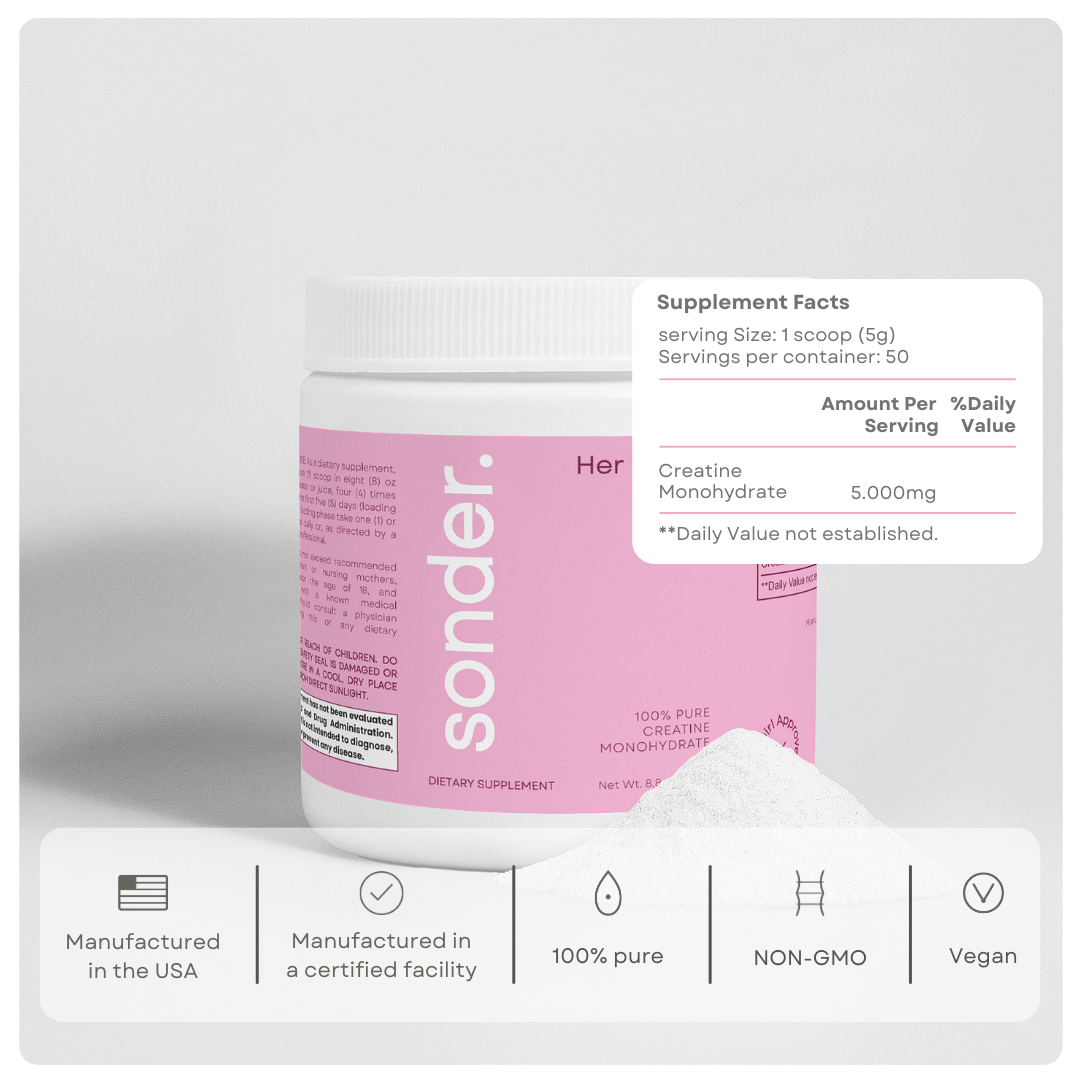
Take 3–5g of pure creatine monohydrate daily. Timing is less important than consistency — but morning works well because it pairs naturally with hydration and breakfast.
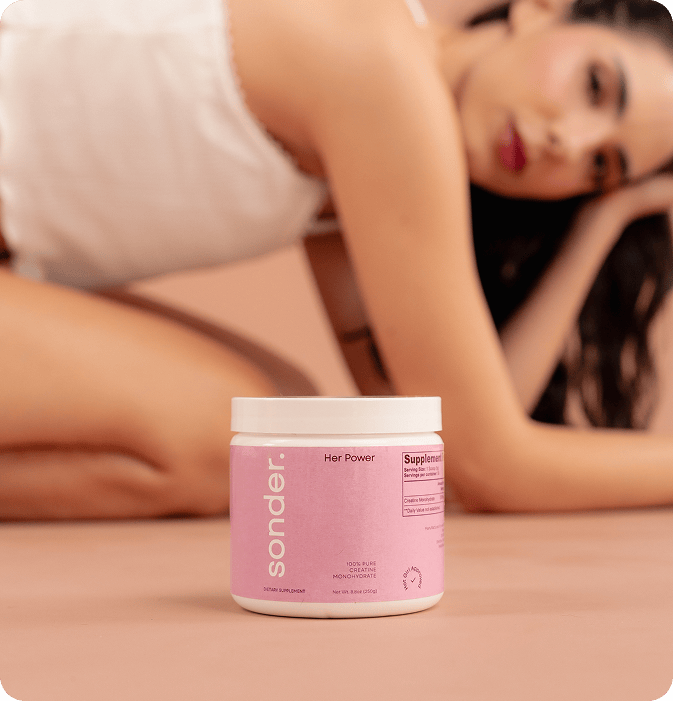
Mix it into water, your morning smoothie, or coffee. It's unflavored and virtually tasteless. Her Power™ by Sonder is 100% pure creatine monohydrate — no fillers, no additives, no fluff. Just the compound your body actually needs.
How to Build Your Personalized Morning Routine: A Step-by-Step Framework
Step 1: Define your "why"
What do you actually want your mornings to give you? More energy? Stronger workouts? Calmer focus? Clearer skin? Write it down. Vague goals produce vague routines.
Step 2: Audit your current mornings
For 3 days, note what you actually do from wake-up to 9 AM. No judgment. Just data. You'll quickly see what's working, what's wasting time, and where the friction lives.
Step 3: Choose 3–5 core habits
Based on the pillars above, select the habits that directly serve your goals. Don't try to do all of them at once. Start with 3.
Step 4: Design your sequence
Order matters. A logical flow:
- Water (immediate)
- Sunlight + movement (within 30 minutes)
- Protein breakfast + creatine (post-movement)
- Mindfulness / intention setting (before screens)
Step 5: Prepare the night before
Lay out workout clothes. Pre-fill your water glass. Set your smoothie ingredients. The version of you at 6:30 AM will not make good decisions — the version of you at 10 PM can make them in advance.
Step 6: Start smaller than you think you should
If your current routine is zero, start with two habits. Master them for two weeks. Then add one more. According to research by Phillippa Lally at University College London, it takes an average of 66 days — not 21 — to form a new habit (Lally et al., 2010). Give yourself the runway.
Step 7: Track, adjust, and give yourself grace
What gets measured gets managed. A simple checkmark in a journal is enough. And when life disrupts the routine — because it will — the goal isn't perfection. It's returning to the routine as fast as possible without self-judgment.
How to Overcome the Most Common Morning Routine Barriers
"I'm not a morning person"
You might not be — and that's okay. A strong morning routine doesn't require waking at 5 AM. It requires waking at a consistent time and doing intentional things first. Shift your wake time by 15-minute increments over 2–3 weeks to reduce the shock to your system.
"I don't have time"
A powerful morning routine can be 20 minutes. Water (2 minutes). A walk outside (10 minutes). A high-protein breakfast (8 minutes). Done. You have 20 minutes. The question is whether you're spending it scrolling or investing it.
"I start strong then fall off"
This is a design problem, not a willpower problem. You've built a routine that's too complex, too long, or too dependent on perfect conditions. Strip it back. Two habits you do every day beat ten habits you do twice a week.
"Life keeps getting in the way"
Build a "minimum viable routine" — the 10-minute version you can do even on the worst days. Travel, sick kids, late nights — the minimum viable routine is your fallback. It keeps the chain unbroken.
Your Strong Morning Starts Now
You don't need a perfect morning. You need a consistent one.
Pick your two core habits this week. Hydrate when you wake up. Step outside for 10 minutes. Get your protein in. That's enough to start. Stack creatine into your morning when you're ready to amplify what you're already building — because the energy, strength, and mental clarity you're working toward deserve real support.
Try Her Power™ creatine monohydrate — pure, unflavored, and backed by the science your mornings deserve.
References
Armstrong, L. E., Ganio, M. S., Casa, D. J., Lee, E. C., McDermott, B. P., Klau, J. F., Jimenez, L., Le Bellego, L., Chevillotte, E., & Lieberman, H. R. (2012). Mild dehydration affects mood in healthy young women. Journal of Nutrition, 142(2), 382–388. https://doi.org/10.3945/jn.111.142000
Antonio, J., Candow, D. G., Forbes, S. C., Gualano, B., Jagim, A. R., Kreider, R. B., Rawson, E. S., Smith-Ryan, A. E., VanDusseldorp, T. A., Willoughby, D. S., & Ziegenfuss, T. N. (2021). Common questions and misconceptions about creatine supplementation: What does the scientific evidence really show? Journal of the International Society of Sports Nutrition, 18(1), 13. https://doi.org/10.1186/s12970-021-00412-w
Boschmann, M., Steiniger, J., Hille, U., Tank, J., Adams, F., Sharma, A. M., Klaus, S., Luft, F. C., & Jordan, J. (2003). Water-induced thermogenesis. Journal of Clinical Endocrinology & Metabolism, 88(12), 6015–6019. https://doi.org/10.1210/jc.2003-030780
Centers for Disease Control and Prevention. (2016). 1 in 3 adults don't get enough sleep. https://www.cdc.gov/media/releases/2016/p0215-enough-sleep.html
Chilibeck, P. D., Kaviani, M., Candow, D. G., & Zello, G. A. (2017). Effect of creatine supplementation during resistance training on lean tissue mass and muscular strength in older adults: A meta-analysis. Open Access Journal of Sports Medicine, 8, 213–226. https://doi.org/10.2147/OAJSM.S123529
Goyal, M., Singh, S., Sibinga, E. M. S., Gould, N. F., Rowland-Seymour, A., Sharma, R., Berger, Z., Sleicher, D., Maron, D. D., Shihab, H. M., Ranasinghe, P. D., Linn, S., Saha, S., Bass, E. B., & Haythornthwaite, J. A. (2014). Meditation programs for psychological stress and well-being. JAMA Internal Medicine, 174(3), 357–368. https://doi.org/10.1001/jamainternmed.2013.13018
Kondo, D. G., Sung, Y. H., Hellem, T. L., Fiedler, K. K., Shi, X., Jeong, E. K., & Renshaw, P. F. (2011). Open-label adjunctive creatine for female adolescents with SSRI-resistant major depressive disorder: A 31-phosphorus magnetic resonance spectroscopy study. Journal of Affective Disorders, 135(1–3), 354–361. https://doi.org/10.1016/j.jad.2011.06.004
Lally, P., van Jaarsveld, C. H. M., Potts, H. W. W., & Wardle, J. (2010). How are habits formed: Modelling habit formation in the real world. European Journal of Social Psychology, 40(6), 998–1009. https://doi.org/10.1002/ejsp.674
Leidy, H. J., Bossingham, M. J., Mattes, R. D., & Campbell, W. W. (2013). Increased dietary protein consumed at breakfast leads to an initial and sustained feeling of fullness during energy restriction compared to other meal times. American Journal of Clinical Nutrition, 97(4), 677–688. https://doi.org/10.3945/ajcn.112.053116
Lewy, A. J., Rough, J. N., Songer, J. B., Mishra, N., Yuhas, K., & Emens, J. S. (2006). The role of melatonin in the circadian system: New perspectives. Journal of Biological Rhythms, 21(6), 441–450. https://doi.org/10.1177/0748730406292823
Rae, C., Digney, A. L., McEwan, S. R., & Bates, T. C. (2003). Oral creatine monohydrate supplementation improves brain performance: A double-blind, placebo-controlled, cross-over trial. Proceedings of the Royal Society B: Biological Sciences, 270(1529), 2147–2150. https://doi.org/10.1098/rspb.2003.2492
Ratey, J. J., & Hagerman, E. (2008). Spark: The revolutionary new science of exercise and the brain. Little, Brown and Company.
Smith-Ryan, A. E., Cabre, H. E., Eckerson, J. M., & Candow, D. G. (2021). Creatine supplementation in women's health: A lifespan perspective. Nutrients, 13(3), 877. https://doi.org/10.3390/nu13030877
Walker, M. (2017). Why we sleep: Unlocking the power of sleep and dreams. Scribner.