
Her Power Unlocked: Why Creatine Is a Game-Changer for Women's Health and Longevity
Women have up to 70–80% lower natural creatine stores than men — yet creatine remains one of the most underused supplements in women's wellness (Smith-Ryan et al., 2021). That gap matters more than most people realize. Creatine isn't just a gym supplement for men chasing muscle. For women, it's a daily tool for stronger muscles, sharper thinking, healthier bones, and sustained energy at every stage of life.
So, is creatine good for women? Yes — unequivocally. Research spanning more than 2,000 clinical studies confirms that creatine monohydrate is safe, effective, and especially valuable for female physiology. Whether you're in your 30s building strength, navigating perimenopause, or simply want more energy to get through your day, creatine delivers.
Here's everything you need to know.
What Is Creatine and How Does It Fuel Your Body?
Creatine is a naturally occurring compound your body makes from three amino acids: arginine, glycine, and methionine. Your liver and kidneys produce it, and you get small amounts from red meat and fish. Once inside your body, creatine is stored primarily in your muscles as phosphocreatine — your cells' rapid-fire energy reserve.
Here's the key mechanism: when you need a quick burst of energy (lifting a weight, sprinting, even thinking hard), your body burns ATP (adenosine triphosphate). Phosphocreatine rapidly regenerates ATP, so you can keep going harder, longer. More creatine stored = more ATP recycled = more power, endurance, and mental output.
The problem? Women naturally store significantly less creatine than men (Smith-Ryan et al., 2021). Smaller muscle mass, lower dietary intake of red meat, and hormonal differences all contribute. That means women feel the effects of creatine depletion more acutely — especially during intense training, high-stress periods, or hormonal transitions like perimenopause.
Creatine monohydrate is the most researched and bioavailable form. It's the gold standard — pure, simple, and backed by decades of evidence (Antonio et al., 2021).
What Are the Benefits of Creatine for Women?
The benefits of creatine for women go far beyond the gym. Here's what the science actually shows.
Does Creatine Build Lean Muscle Without Bulking?
Yes. Creatine supports lean muscle tone and functional strength — not the kind of bulk you see on competitive bodybuilders.
A 2024 meta-analysis published in The Journal of Strength and Conditioning Research found that creatine supplementation combined with resistance training increased lean body mass by approximately 1.14 kg (2.5 lbs) in women (Lanhers et al., 2024). That's lean, functional muscle. Not bulk.
Women don't have the testosterone levels required for dramatic muscle hypertrophy. What creatine does is help you get more out of every workout — more reps, more strength, better recovery — so the muscle you build is tighter and more defined. Think: arms that look toned, legs that feel powerful.
It also actively fights sarcopenia — the age-related muscle loss that accelerates after 30 and becomes significant post-menopause. Starting creatine early is one of the smartest longevity moves a woman can make.
How Does Creatine Boost Energy and Reduce Fatigue?
Creatine replenishes ATP faster, which means more cellular energy — not just during workouts, but throughout your day.
Women who supplement with creatine report less fatigue during training and better sustained energy overall (Rawson & Volek, 2003). If you've ever hit a wall mid-workout or felt drained by 3pm, low creatine stores could be part of the picture. Consistent daily supplementation keeps your phosphocreatine system topped up, so your muscles and brain have what they need to perform.
Can Creatine Improve Cognitive Function and Mood in Women?
According to a review published in Nutrients, creatine supplementation has been associated with measurable improvements in memory, processing speed, and mood regulation — particularly under conditions of stress or sleep deprivation (Avgerinos et al., 2018).
Your brain is an energy-hungry organ. It uses ATP constantly. When creatine stores are low, cognitive performance suffers. Studies show creatine can improve short-term memory and reduce mental fatigue, which is especially relevant for women managing demanding careers, family responsibilities, and the brain fog that often accompanies hormonal shifts (Avgerinos et al., 2018).
Sharper. Clearer. More you.
Is Creatine Good for Women's Bone Health?
Yes — and this is one of the most underappreciated benefits. Creatine combined with resistance training has been shown to support bone mineral density, which is CRITICAL for women (Chilibeck et al., 2017).
Women lose bone density rapidly after menopause due to declining estrogen. Osteoporosis affects approximately 1 in 3 women over 50 (International Osteoporosis Foundation, 2023). Creatine doesn't just build muscle — it supports the bone-building cells (osteoblasts) that maintain skeletal strength. According to a study in Medicine & Science in Sports & Exercise, postmenopausal women who supplemented with creatine and performed resistance training showed significantly greater preservation of bone mineral density compared to those who exercised without creatine (Chilibeck et al., 2017).
Strong muscles. Strong bones. That's the combination that protects you for decades.
How Does Creatine Support Women Through Hormonal Changes?
This is where creatine becomes genuinely life-changing for women — and where most generic supplement advice falls short.
During your menstrual cycle: Estrogen and progesterone fluctuations affect muscle strength and energy output throughout the month. Research suggests creatine supplementation may help buffer performance dips during the luteal phase, when fatigue and reduced strength are common (Ellery et al., 2016).
During perimenopause and menopause: Estrogen decline accelerates muscle and bone loss, increases fatigue, and contributes to cognitive changes including memory lapses and brain fog. According to research published in the Journal of the International Society of Sports Nutrition, creatine supplementation shows particular promise in mitigating these estrogen-related declines in muscle mass, bone density, and cognitive function (Candow et al., 2025).
Postpartum: Creatine stores are significantly depleted during pregnancy and breastfeeding. While research is still emerging in this area, early evidence suggests creatine may support recovery. Always consult your healthcare provider before supplementing postpartum or during pregnancy.
Creatine isn't just a fitness supplement. It's a hormonal health ally.
Does Creatine Help Women Recover Faster?
Yes. Creatine reduces exercise-induced muscle damage and inflammation, helping your body repair faster between sessions (Rawson & Volek, 2003). Less soreness. Faster turnaround. More consistency in your training — which is where real results come from.
Can Creatine Help Women With Weight Management?
Creatine doesn't directly burn fat. But it supports lean muscle mass — and muscle is metabolically active tissue. More muscle means a higher resting metabolic rate, which means your body burns more calories at rest (Lanhers et al., 2024).
Women who build lean muscle through creatine-supported training often see improvements in body composition — less fat, more tone — even without dramatic changes on the scale. The scale doesn't tell the whole story. How you look and feel does.
Addressing Her Concerns: Debunking Common Creatine Myths for Women
Will Creatine Make Me Bulky?
No. This is the myth that keeps too many women away from one of the safest, most effective supplements available. Creatine promotes lean muscle tone and functional strength. Without the high testosterone levels men have, women simply don't build bulk the same way. What you get is definition, not size.
Does Creatine Cause Kidney Damage?
In healthy individuals, creatine at recommended doses (3–5g daily) does not harm kidney function (Antonio et al., 2021). This myth stems from the fact that creatine metabolism produces creatinine, a marker doctors monitor for kidney health. But supplementing creatine naturally raises creatinine slightly — it doesn't indicate damage. If you have pre-existing kidney conditions, consult your doctor before supplementing.
Does Creatine Cause Bloating?
Creatine draws water into your muscle cells — this is called intracellular hydration, and it's a feature, not a bug. Hydrated muscles perform better and recover faster. This is different from subcutaneous water retention (the puffy feeling under the skin). Staying well-hydrated and skipping the loading phase minimizes any initial discomfort.
Does Creatine Affect Female Hormones or Fertility?
Current evidence shows no negative impact of creatine on female hormones or fertility in healthy women (Candow et al., 2025). In fact, research suggests creatine may support hormonal health during transitions like perimenopause by protecting the muscle and cognitive function that declining estrogen would otherwise compromise. If you're actively trying to conceive or pregnant, speak with your healthcare provider.
Is Creatine a Steroid?
Absolutely not. Creatine is a naturally occurring compound found in your body and in food. It is not a hormone, not a steroid, and not a controlled substance. It's as natural as the protein in your chicken breast — just in a more concentrated, bioavailable form.
How Should Women Take Creatine? Dosage, Timing, and Type
What Is the Right Creatine Dosage for Women?
3–5 grams per day is the clinically supported dose for women (Antonio et al., 2021). You don't need to load. A loading phase (20g/day for 5–7 days) can saturate stores faster, but it's optional and increases the likelihood of initial GI discomfort. Consistent daily supplementation at 3–5g gets you to the same place within 3–4 weeks.
When Should Women Take Creatine?
Timing matters less than consistency. That said, taking creatine post-workout may offer a slight edge in muscle uptake due to increased insulin sensitivity after exercise (Antonio et al., 2021). If you're not training that day, take it with a meal. Pick a time you'll remember and stick to it daily.
What Type of Creatine Is Best for Women?
Creatine monohydrate. Full stop. It's the most studied, most effective, and most affordable form. Other forms — creatine HCl, buffered creatine, ethyl ester — have not been shown to outperform monohydrate in clinical research (Antonio et al., 2021). Don't pay more for less evidence.
How Much Water Should You Drink with Creatine?
Aim for at least 2–3 liters of water daily when supplementing. Creatine pulls water into muscle cells, so adequate hydration keeps everything functioning optimally and prevents any feelings of cramping or heaviness.
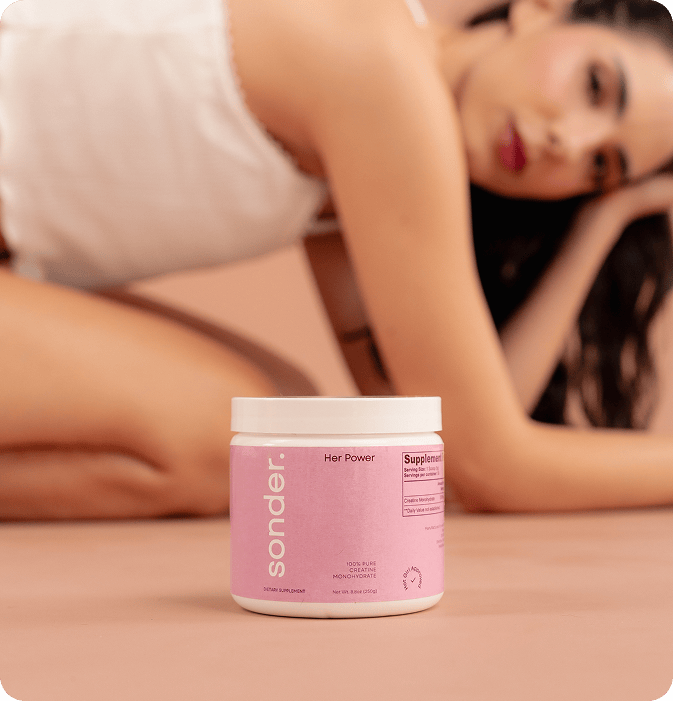
Her Power™ by Sonder: Pure Creatine, Designed for Her
If you're going to supplement with creatine, purity matters. Many products on the market contain fillers, artificial sweeteners, and unnecessary additives that dilute the product and introduce variables you don't need.
Her Power™ by Sonder is 100% pure creatine monohydrate — nothing else. No fillers. No fluff. Just the clinically backed compound your body actually needs, in the exact form that over 2,000 studies have validated. It's formulated specifically with women's physiology in mind, because women's health deserves more than a relabeled men's product.
Strong. Clean. Yours.
Is Creatine Safe for Women Long-Term?
Yes. Creatine monohydrate has been studied extensively for decades across diverse populations, including women of all ages. According to the International Society of Sports Nutrition, creatine monohydrate is the most effective ergogenic nutritional supplement currently available and is considered safe for long-term use in healthy individuals (Antonio et al., 2021).
There is no credible evidence linking long-term creatine use to adverse health outcomes in healthy women. As with any supplement, if you have underlying health conditions, check with your healthcare provider.
Start Supplementing with Intention
You now know the science. Creatine isn't a bodybuilder's secret. It's an ESSENTIAL tool for women who want to feel strong, think clearly, protect their bones, and age on their own terms.
Start with 3–5 grams of pure creatine monohydrate daily. Be consistent. Pair it with resistance training for maximum benefit. And choose a product with zero fillers so you know exactly what you're putting in your body.
Try Her Power™ by Sonder — 100% pure creatine monohydrate, backed by science, designed for women. Join over 10,000 women already using it to unlock their strength.
References
Antonio, J., Candow, D. G., Forbes, S. C., Gualano, B., Jagim, A. R., Kreider, R. B., Rawson, E. S., Smith-Ryan, A. E., VanDusseldorp, T. A., Willoughby, D. S., & Ziegenfuss, T. N. (2021). Common questions and misconceptions about creatine supplementation: What does the scientific evidence really show? Journal of the International Society of Sports Nutrition, 18(1), 13. https://doi.org/10.1186/s12970-021-00412-w
Avgerinos, K. I., Spyrou, N., Bougioukas, K. I., & Kapogiannis, D. (2018). Effects of creatine supplementation on cognitive function of healthy individuals: A systematic review of randomized controlled trials. Experimental Gerontology, 108, 166–173. https://doi.org/10.1016/j.exger.2018.04.013
Candow, D. G., Forbes, S. C., Chilibeck, P. D., & Cornish, S. M. (2025). Creatine supplementation and women's health: A narrative review. Journal of the International Society of Sports Nutrition, 22(1). https://doi.org/10.1080/15502783.2025.2463048
Chilibeck, P. D., Kaviani, M., Candow, D. G., & Zello, G. A. (2017). Effect of creatine supplementation during resistance training on lean tissue mass and muscular strength in older adults: A meta-analysis. Open Access Journal of Sports Medicine, 8, 213–226. https://doi.org/10.2147/OAJSM.S123529
Ellery, S. J., Walker, D. W., & Dickinson, H. (2016). Creatine for women: A review of the relationship between creatine and the reproductive cycle and female-specific benefits of creatine therapy. Amino Acids, 48(8), 1807–1817. https://doi.org/10.1007/s00726-016-2199-y
International Osteoporosis Foundation. (2023). Facts and statistics. https://www.osteoporosis.foundation/facts-statistics
Lanhers, C., Pereira, B., Naughton, G., Trousselard, M., Lesage, F. X., & Dutheil, F. (2024). Creatine supplementation and upper limb strength performance: A systematic review and meta-analysis. Journal of Strength and Conditioning Research, 38(3), 598–607. https://doi.org/10.1519/JSC.0000000000004655
Rawson, E. S., & Volek, J. S. (2003). Effects of creatine supplementation and resistance training on muscle strength and weightlifting performance. Journal of Strength and Conditioning Research, 17(4), 822–831. https://doi.org/10.1519/1533-4287(2003)017<0822:EOCSART>2.0.CO;2
Smith-Ryan, A. E., Cabre, H. E., Eckerson, J. M., & Giersch, G. E. W. (2021). Creatine supplementation in women's health: A lifespan perspective. Nutrients, 13(3), 877. https://doi.org/10.3390/nu13030877